
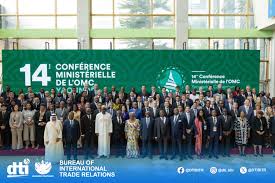
The World Trade Organization’s (WTO) four-day 14th Ministerial Conference (MC14) was held on Monday in Yaoundé, Cameroon.
The organization defined e-commerce as the production, distribution, sale, or marketing of goods and services through electronic means. Many products—such as music, films, and books—that were previously sold in physical form are now available in digital format.
Developing countries raised objections to this arrangement due to the resulting loss of revenue. It is estimated that developing nations incur an annual loss of approximately $10 billion, while India alone suffers a loss exceeding $500 million. Supported by the US, the EU, and Japan, pressure was exerted to make this arrangement permanent; however, India and other developing countries opposed the move, arguing that it would lead to revenue losses and limit the policy space available within the digital economy.
विश्व व्यापार संगठन (डब्ल्यूटीओ) का चार दिनी 14वां मंत्रिस्तरीय सम्मेलन (एमसी14) सोमवार को कैमरून के याउंडे में हुआ।
संगठन के ई-काॅमर्स को इलेक्ट्राॅनिक माध्यमों से वस्तुओं-सेवाओं के उत्पादन, वितरण, बिक्री या विपणन के रूप में परिभाषित किया। पहले भौतिक रूप में बिकने वाले संगीत, फिल्मों, किताबों जैसे कई उत्पादन अब डिजिटल रूप मंे मिल रहे हैं।
इस व्यवस्था से राजस्व क्षति होने के कारण विकासशील देशों ने विरोध किया। अनुमान है कि विकासशील देशों को प्रतिवर्ष करीब 10 अरब डाॅलर और भारत को 50 करोड़ डॅाल से अधिक की क्षति होती है। अमेरिका, ईयू व जापान के समर्थन से इनके स्थायी विस्तार का दबाव डाला गया, जबकि भारत व अन्य विकासशील देशों ने इसके विरोध में कहा कि इससे राजस्व क्षति होगी व डिजिटल अर्थव्यवस्था में नीतिगत गुंजाइश सीमित हो जाएगी।